
An ABSN is an Accelerated Bachelor of Science in Nursing program, which confers a BSN degree. An ABSN is designed for career changers and transfer students who want to switch to nursing, enabling you to earn a nursing degree without starting from scratch.
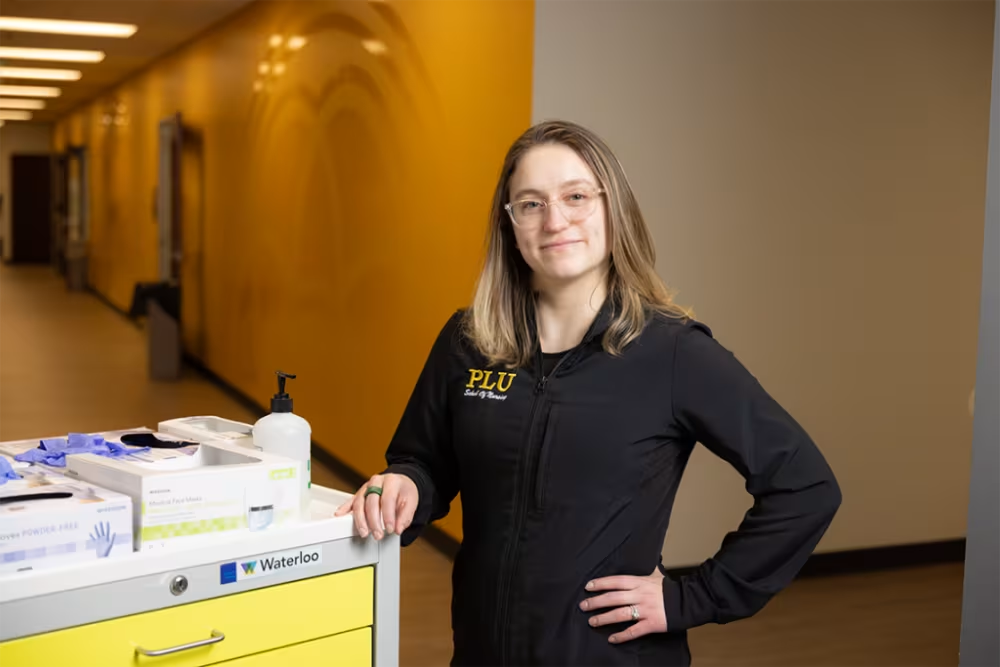
If you would like to become a nurse quickly, you should enroll in an Accelerated Bachelor of Science in Nursing (ABSN) program. What is an ABSN for? An ABSN program enables career changers and transfer students to switch from a non-nursing background to a nursing track. ABSN students can graduate with a nursing degree more quickly than they would in a traditional BSN program.
If you are interested in earning a nursing degree in as few as 16 months, consider Pacific Lutheran University’s (PLU) Accelerated Bachelor of Science in Nursing program near Seattle and Tacoma, Washington. Our ABSN offers rolling admissions and three start dates per year, allowing you to start your education sooner.
Before deciding about your future, learn more about ABSN programs and how they work. Explore the benefits of ABSN programs and get started making the switch to nursing.
What Is an ABSN?
What does ABSN stand for in a nursing context? An ABSN is an Accelerated Bachelor of Science in Nursing program, which confers a Bachelor of Science in Nursing (BSN) degree and qualifies students to take the NCLEX-RN licensure exam to become registered nurses (RNs).
The main purpose of an ABSN is to facilitate a faster transition into the nursing field by allowing students to earn their BSN in less time than a traditional BSN program.
Who Should Consider an ABSN Program?
An ABSN program is ideal for individuals who would like to become a nurse but do not wish to enroll in a traditional BSN program. An ABSN is designed for career changers and transfer students who already have college experience, as this program will build on your non-nursing college education to make the 16-month transition into nursing possible.
You may be eligible for PLU’s ABSN if you have a completed non-nursing bachelor’s degree or at least 60 non-nursing college credits. You will also need to fulfill other requirements, such as prerequisite courses. Your prior non-nursing education may already fulfill some or all prerequisites.
Note that no health care experience is required before applying.
Explore some of the most essential nursing skills you will learn in nursing school.

How Do Accelerated Nursing Programs Work?
ABSN programs enable students to earn a nursing degree quicker than through a traditional BSN program and enter the nursing profession after passing the NCLEX-RN exam. While a traditional nursing degree requires four years of school, the ABSN at Pacific Lutheran prepares you to earn your BSN in as few as 16 months.
The rapid timeline is possible because students have already fulfilled general education requirements and prerequisites upon enrollment in the ABSN. Additionally, the program is fast-paced and rigorous, designed to cover a lot quickly, and requires full-time study.
ABSN programs include a combination of learning modalities: online coursework, on-site nursing labs, and clinical placements in local health care facilities.
Online Coursework Builds a Strong Foundation
In PLU’s ABSN program, online coursework lays the foundation for your education, covering everything from pathophysiology to health care diversity. These courses will set the stage for the applied skills you will develop during nursing labs and clinicals.
PLU’s asynchronous coursework meets students where they’re at. By not limiting classroom time, students can dedicate more time to challenging content and move more quickly through familiar content. Though this coursework is online, students will still find connections with classmates and instructors through discussion boards, email, and video conferencing.
Skills and Simulation Labs Prepare Students for the Real Thing
With condensed timelines, it is crucial to master clinical skills quickly. PLU’s clinical skills lab and state-of-the-art simulation lab are essential to the ABSN program.
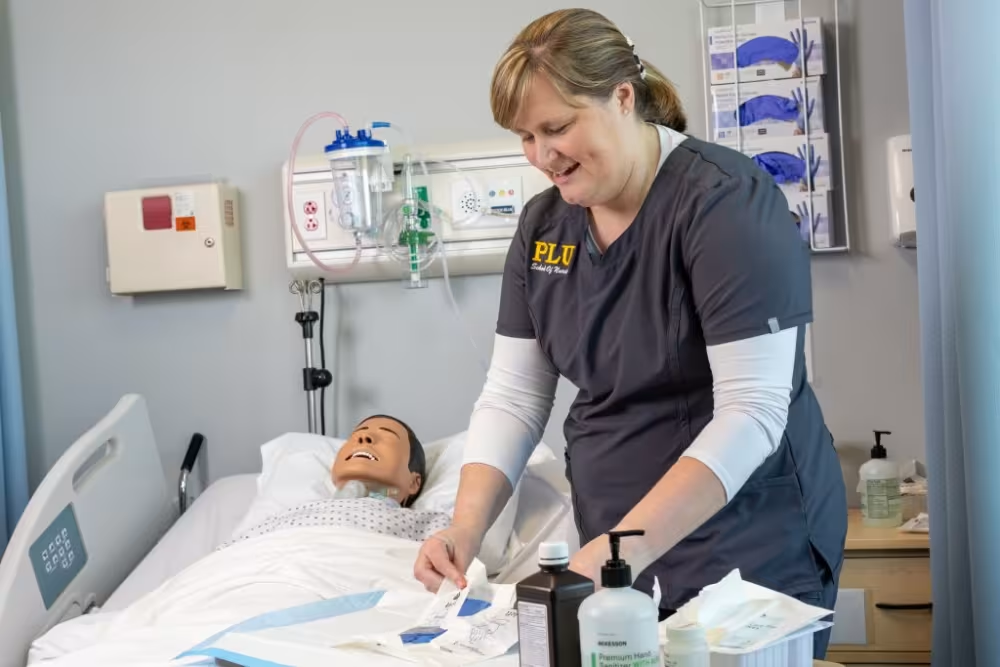
In the skills lab, students use high-fidelity manikins to practice nursing skills and procedures, such as inserting IVs and changing dressings. After practicing in the lab, you will feel better prepared to care for actual patients in a fast-paced clinical setting.
In the simulation lab, students apply the nursing process to a simulated health problem, such as cardiac arrest or an allergic reaction. Your instructor will provide information about your simulated patient, and, either independently or with a team, you will determine and demonstrate proper patient care for each scenario.
Your nursing lab experience is the perfect place to ask questions and make mistakes within a safe and supportive learning environment.
Clinical Rotations Provide Immersive Experience
Students often find that clinical rotations are the most hands-on part of nursing school, allowing for immersive application of clinical skills and nursing theory. At PLU, you will start clinicals in the first semester, and you will be placed at some of Seattle’s and Washington’s top hospitals.
During clinical rotations, you will be assigned to a nursing unit and guided by an experienced RN. You will practice providing direct patient care under supervision, starting with simple nursing tasks and progressing to more complex tasks. PLU students complete clinicals in a variety of practice areas, including adult health, mental health, and critical care.
During clinicals, students have opportunities to network and build professional relationships with nurses and other health care providers in the community. By the time you graduate from PLU’s ABSN program, you will have gained over 600 hours of real-world experience through simulation and direct patient care.
How Long Does an ABSN Program Take?
Each ABSN program establishes its own timeline. At PLU, it is possible to graduate in as few as 16 months. During our 16-month program, you will complete a total of 64 credit hours over four full-time semesters.
What Will You Learn in an ABSN Program?
What is an accelerated nursing program like? Although an ABSN program is a fast-track pathway, it provides a comprehensive nursing education that prepares students to become skillful RNs.
The curriculum at PLU’s ABSN program encompasses topics in the following:
- Care of complex and chronic conditions
- Health assessment
- Health care technology
- Pathophysiology
- Pharmacology
- Psychiatric mental health
You will also study health care leadership, health policy, and health care diversity.

Why become a nurse? Consider these ten reasons to become a nurse.
Benefits of an Accelerated Nursing Program
What is an ABSN’s top benefit? Each ABSN student has their own reasons for choosing an accelerated nursing program, but for many, it is the opportunity to graduate in as few as 16 months with a quality BSN, without having to repeat general education courses. An ABSN provides a fast track to licensure for future RNs who want to re-enter the workforce quickly.
The BSN conferred by an ABSN is the same degree awarded by traditional BSN programs and is equally respected by health care employers. Although accelerated, PLU’s ABSN is an accredited learning path that will prepare you to sit for the NCLEX-RN with confidence.
Is an ABSN Program Right for You?
If you are considering changing careers and wonder if an ABSN program aligns with your goals, here are a few things to ask yourself:
- Do you have a non-nursing bachelor’s degree or at least 60 college credits?
- Is your cumulative GPA at least 3.0?
- Can you commit to 16 consecutive months of full-time study?
In addition to the 60 credits, you must complete specific prerequisite courses in subjects including microbiology, chemistry, human development, statistics, and nutrition.
How to Get Started With an Accelerated BSN Program
You can get started on your nursing education by connecting with an admissions representative at PLU. Your representative will begin by reviewing your eligibility for the program and developing a personalized plan for you, including completing any required prerequisites. Your representative will then help you navigate each step of the admission process.
A quick breakdown of the steps you will follow is:
- Request information and connect with an admissions representative
- Fulfill admission requirements, such as prerequisites
- Submit your application
- If accepted, apply for financial aid and make a plan for attending school
- Graduate in as few as 16 months with a BSN
- Apply to the Washington Board of Nursing (WABON) for a Registered Nurse license
- Pass the NCLEX-RN to obtain your nursing license
- Apply to nursing jobs in your chosen specialty

Get Started Today at Pacific Lutheran University
Pacific Lutheran University can help you transition to a nursing career faster with our ABSN program. We offer nursing education that emphasizes holistic and comprehensive care, scientific knowledge, and health care technology. At our ABSN sites near Seattle and Tacoma, Washington, our students benefit from experienced faculty and small class sizes to maximize personalized instruction. PLU also offers a traditional BSN program and graduate degree options in nursing.
Request information about the ABSN program today.